
By Arielle Weg-Zager
I never had much of a New Year’s Day food tradition growing up. On New Year’s Eve, I’d enjoy some festive party food while watching the Times Square ball drop on TV. But by morning, January 1 always meant setting myself up to start the new year right. I never paid much attention to what we had for dinner. But when I met my now husband, that all changed.
I’m from New Jersey, but my husband grew up in the South, where his New Year’s Day foods tradition consisted of eating black eyed peas and cabbage for dinner. He was flexible on the recipe itself, but the ingredients had to be present. Black eyed peas, which are more closely related to beans than peas taste-wise, are a common ingredient used in Southern cooking. It wasn’t something I often come across in my hometown. As it turns out, eating black eyed peas on New Year’s Day is incredibly common, symbolizing wealth and prosperity in the year to come.
When it comes to cabbage, the “official” lucky ingredient is greens of any kind (symbolizing money), so collard greens, cabbage, or kale usually find themselves on the dinner table. While I’ve grown to love collard greens (something I didn’t see much growing up in Jersey either), and I’m known for my affinity for kale, my husband can’t ever get enough cabbage. So, black eyed peas and cabbage became the norm for New Year’s Day foods.
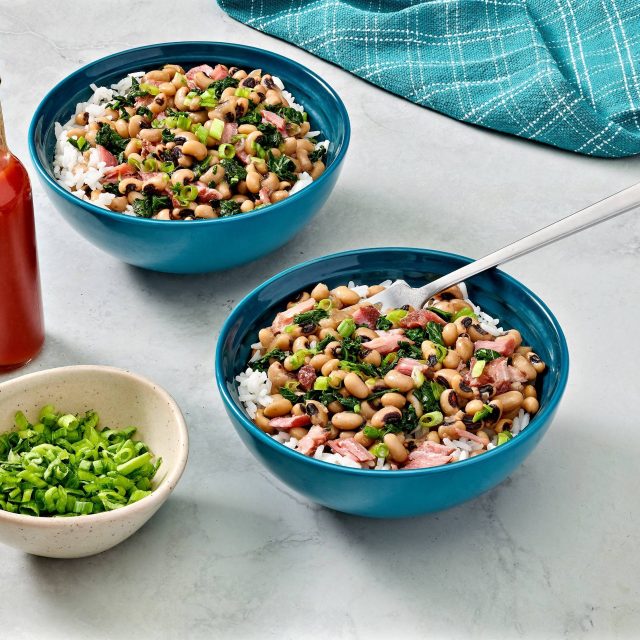
Last year, I tried to make my first Hoppin’ John, one of the most famous Southern rice and beans dishes eaten on New Year’s Day. I’m a vegetarian, so I made ours without the traditional ham, and it was a hit nonetheless. I’d recommend our Instant Pot® Hoppin’ John with Greens, which leans into the Instant Pot for ultra-tender black-eyed peas and a lot of delicious, infused flavor. I also love that it has the greens built in, so it’s all in one pot. Plus, it’s ready in under an hour, uses five ingredients, and feeds eight, so you can enjoy leftovers later in the week. It’s the perfect meal when you’re looking for delicious and lucky New Year’s Day foods.
And it turns out, there are plenty of other lucky eats for New Year’s Day. Here are three more New Year’s Day food traditions I plan to try this year
Sugared Prosecco Grapes

An old Spanish and Latin American tradition has been growing in popularity the last few years. Ideally, you’ll eat 12 grapes at midnight, each for every month of the year. Sweet grapes indicate good months ahead, and sour grapes indicate challenges in the year to come. This recipe leans into another New Year’s favorite (sparkling wine) for a fun and festive twist on the tradition.
Get the recipe: Sugared Prosecco Grapes
Easy Southern Cornbread with Whipped Honey Butter

While I could definitely get a store-bought cornbread, I love that this recipe uses seven ingredients and is ready in just 25 minutes for a homemade feel. Cornbread is another food that symbolizes wealth in the New Year. I especially love that the flavors work so beautifully with the Hoppin’ John, so we’ll have lots of luck and prosperity well into the year ahead.
Get the recipe: Easy Southern Cornbread with Whipped Honey Butter
Longevity Noodles
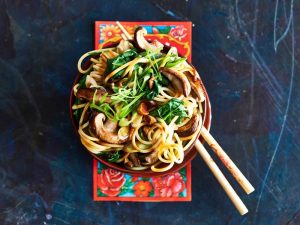
Lengthy noodles are often enjoyed during the Chinese New Year to symbolize longevity, and you can easily extend this into any New Year’s celebration. This recipe is really quick to throw together and leans into pantry staples, like a box of spaghetti and a bottle of soy sauce for a delicious and maybe even lucky meal. For easier recipes for the Lunar New Year (which has its own celebration weeks after the secular New Year), click here.
Get the recipe: Longevity Noodles
Arielle Weg-Zager is the digital editor of SavoryOnline and has been writing about food, nutrition, and health for over 8 years. She collects cookbooks and loves nothing more than cooking elaborate meals for her friends or exploring the local restaurant scene.